
The table is set differently for a long evening than for a short one.
Short evenings get fewer glasses. Two per setting, maybe three. Glassware that stacks neatly, plates that match. Cutlery on either side of each plate, arranged the way it was taught.
Long evenings get more of everything, and most of it doesn't match.
The good linen comes out, even if it has a small stain that no one will look closely enough to see. Heavy in the hand. Drapes properly. The kind of cloth that gets older without getting tired.
The candles are unscented and tall enough to last the night. Two or three on the table itself, low enough that no one's face is in shadow when they lean in. The overhead lights are off by the time the first course is cleared.
The glassware is mostly mismatched. Found at flea markets, inherited, picked up one at a time. A few coupes from somewhere. Wineglasses with different stems. A couple of small tumblers that get used for water and sometimes for a final drink, depending on the hour.
The plates do not need to match either. The point of the dinner is not the plate.
There are objects on the table that have nothing to do with the meal. A bottle of fragrance, kept where it can be picked up, smelled, passed around. A small dish of salt and another of olives. A book that was open earlier and has not been put away. A note someone left for the next person to find their seat.
Nothing is precious. Everything is meant to be touched.
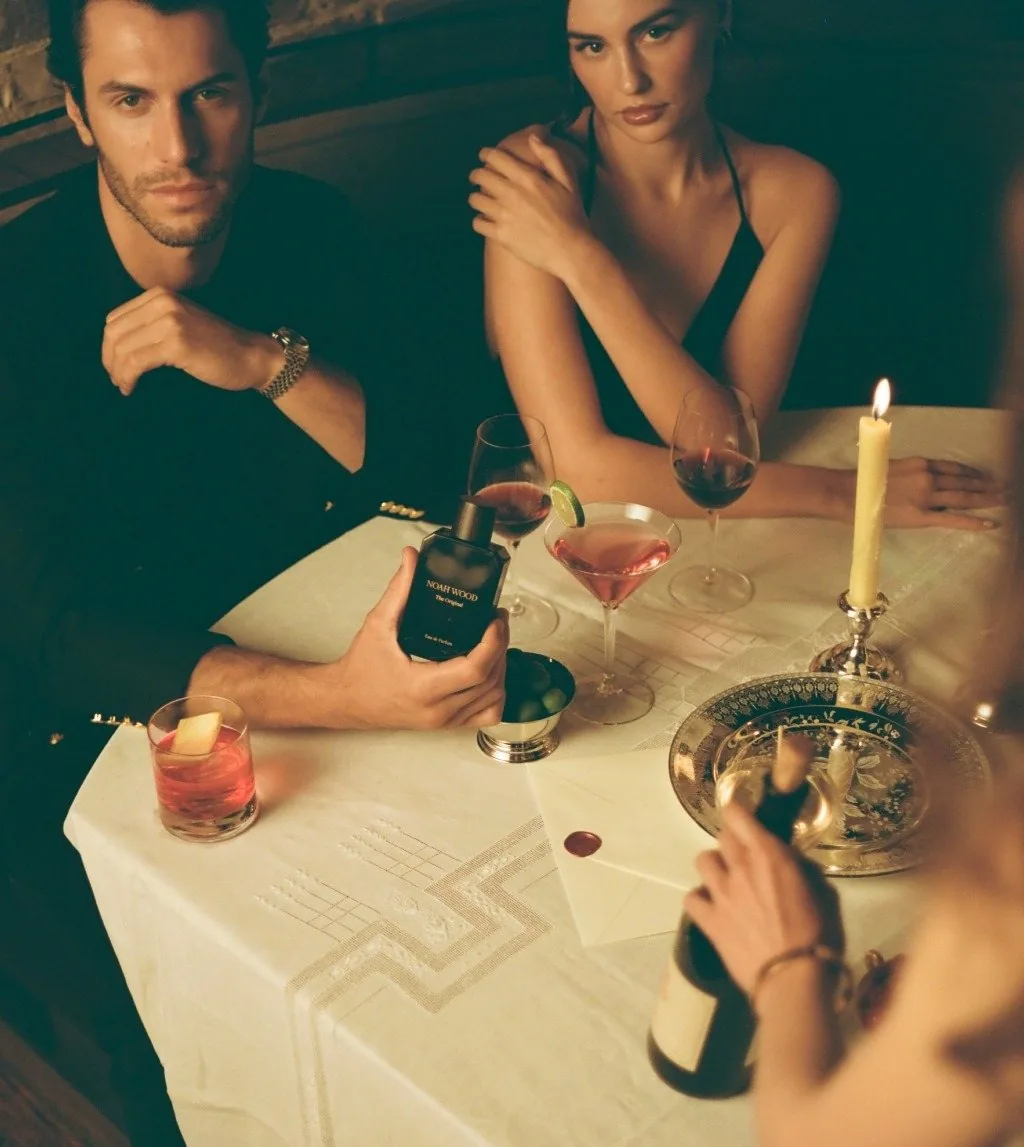
By the second course, the room rearranges itself. Glasses move. Bottles travel. A jacket gets folded over a chair. Someone leans on someone else's shoulder.
This is what the table was set for. Not the food, exactly. The people, mostly.
This is the kind of dinner we host. Long, mismatched, used. A house full of the people who keep coming back to it.
— Minna